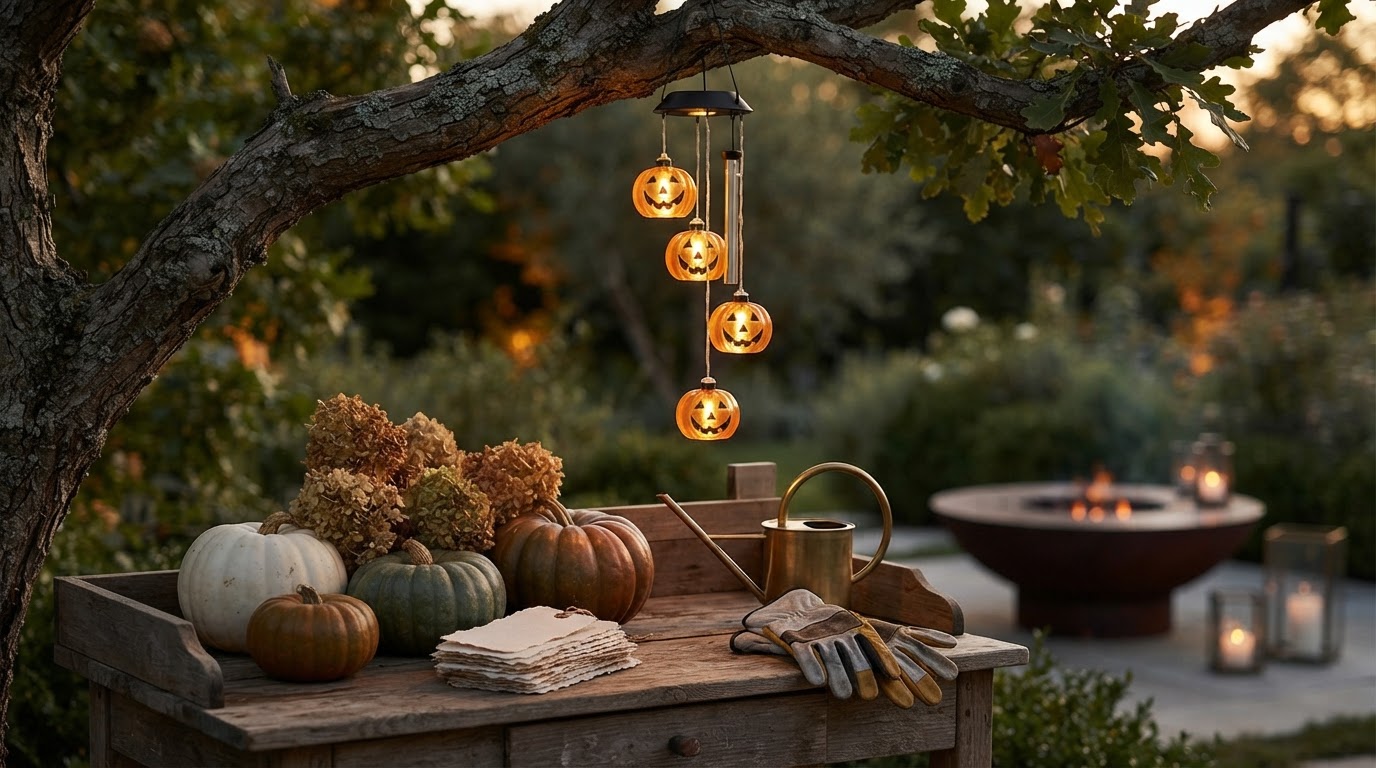
Solar Pumpkin Chime Performance in Halloween Garden Sets
 Maya ChenContributing Editor
August 31, 2026 — The seasonal shift toward autumn has accelerated the deployment of automated lighting, with the Solar Pumpkin Chime emerging as a central component in modern Halloween garden decorations. While aesthetic appeal often drives consumer choice, the technical viability of these units determines whether a display remains illuminated through the critical evening hours.
The conventional wisdom says that decorative solar units are merely toys meant for short-term visual flair, yet industry data suggests a pivot toward higher-efficiency photovoltaic integration in residential landscaping. According to the International Energy Agency, the cost of solar PV has dropped significantly, allowing manufacturers to include better storage capacity in smaller consumer goods. This shift means that modern [fall outdoor solar lights hanging](/blog/fall-outdoor-solar-lights-hanging) are no longer restricted to dim, flickering performance but are expected to maintain consistent output throughout the night.
The Seasonal Efficiency Metric
Photo by Maximilian Müller on Pexels
Here's the part nobody talks about: the intersection of decreasing daylight hours and the increased power draw of multi-sensory decorations. When evaluating [solar halloween porch decor](/blog/solar-halloween-porch-decor), the Solar Pumpkin Chime must overcome a specific energy deficit. During October, average peak sun hours in temperate zones drop to roughly three to four hours per day. For a unit to achieve a full 8-hour runtime, the conversion efficiency of the monocrystalline panel must exceed 19%. The Solar Pumpkin Chime utilizes a high-conversion solar cell paired with a 600mAh Ni-MH battery, engineered to trigger at a light threshold of less than 15 lux. Run the math: a standard LED in these chimes draws approximately 20mA; a 600mAh battery theoretically provides 30 hours of light, but real-world discharge curves and temperature fluctuations during autumn nights reduce this effective capacity by 40%. This leaves a functional buffer that ensures the [pumpkin wind chimes solar powered](/blog/pumpkin-wind-chimes-solar-powered) remain active even after two days of heavy cloud cover. While many competitors fail when the ambient temperature drops below 40°F, the internal circuitry of the Solar Pumpkin Chime is rated for a broader thermal range, preventing the premature voltage drop-off that typically kills seasonal displays by mid-October.
Expert tip: To maximize the lifespan of the internal Ni-MH battery, users should ensure the panel is wiped clean of fallen leaves or frost every 72 hours, as even 10% surface coverage can reduce charging efficiency by half.
Most consumers prioritize the glow, but the true value lies in the resilience of the charging cycle during the transition to winter. I’ll change my mind when a passive, non-solar alternative can match the zero-intervention requirements of these specialized solar halloween porch decor setups.