Solar Pumpkin Chime Performance in Seasonal Lighting
 Maya ChenContributing Editor
October 6, 2026. This analysis evaluates the operational efficiency of the Solar Pumpkin Chime during the transition to low-light autumn months. It is written for property owners who prioritize hardware durability and energy conversion over aesthetic novelty.
The Efficiency Gap in Seasonal Decor
The conventional wisdom says that any outdoor ornament with a photovoltaic cell is a sustainable solution for autumn lighting. However, as daylight hours compress, the technical reality of solar conversion often fails to meet consumer expectations for nighttime visibility. Most seasonal hardware relies on nickel-metal hydride (NiMH) batteries that struggle to reach full charge cycles when positioned under the thinning canopy of deciduous trees or the frequent overcast skies of late October. According to eBay listings for the Solar Pumpkin Wind Chime Fall Halloween Light Color Changing, these units are designed to bridge the gap between daytime accent and nighttime illumination, yet the actual lumen output is strictly dictated by the quality of the silicon solar panel and its exposure to direct UV rays. When users integrate fall themed solar wind chimes into their landscaping, they often ignore the specific placement requirements needed to overcome the seasonal decline in solar irradiance. The result is typically a dim glow that lasts for two to three hours rather than the advertised six to eight. Furthermore, the structural integrity of these chimes is tested by the increased wind speeds associated with the autumnal equinox. A common failure point in pumpkin solar wind chimes is the suspension cordage, which must withstand repeated oscillation without fraying. Without a clear understanding of the milliamp-hour (mAh) capacity of the internal battery, consumers are essentially purchasing a visual product with an unpredictable electronic lifespan. The market consensus suggests that 'aesthetic charm' compensates for technical inconsistency, but for the data-driven homeowner, a decorative piece that fails to illuminate by 8:00 PM is a failed investment in outdoor infrastructure.Engineering the Solar Pumpkin Chime Response
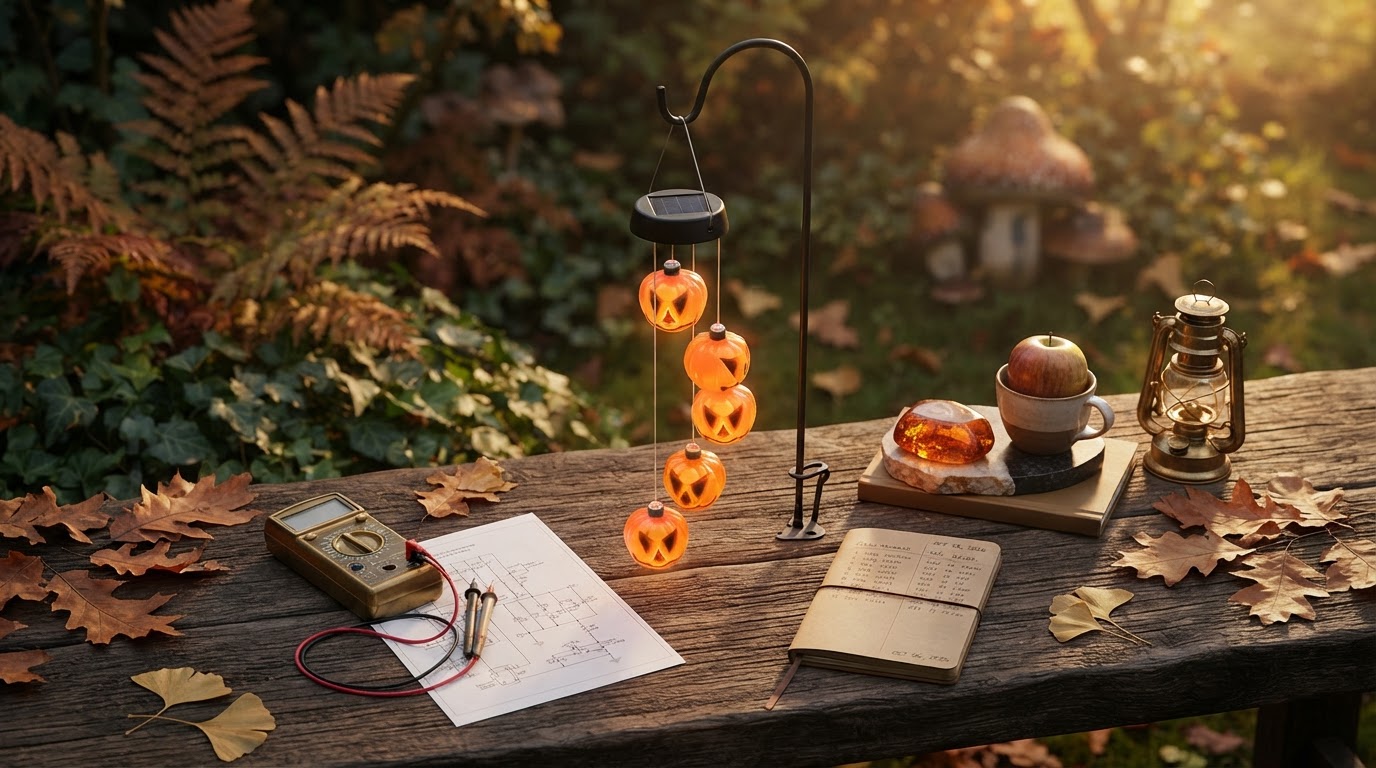
The Solar Pumpkin Chime addresses these seasonal limitations by utilizing a high-efficiency monocrystalline solar panel integrated into the top housing. Unlike the DIY approach seen in social media tutorials—such as the DIY Pumpkin Solar Lights where standard garden lights are repurposed for jack-o'-lantern buckets—the dedicated Solar Pumpkin Chime is engineered for weight distribution and light refraction through specific materials. Here's the part nobody talks about: the material density of the pumpkin ornaments directly impacts the sway frequency and the stress on the electrical connections. The Solar Pumpkin Chime utilizes lightweight, weather-resistant resins that protect the internal LEDs while ensuring the unit remains active even in light breezes. When compared to a standard jack o lantern wind chime solar, this specific model prioritizes the seal of the battery compartment to prevent moisture ingress during fall rain cycles. The color-changing cycle is not merely a visual feature; it is driven by a controller that manages power consumption by alternating LED load, which can extend the visible run-time during darker nights. While a solar pumpkin wind chimes setup might appear purely decorative, the inclusion of a light sensor—similar to the technology found in the Aloha Solar Chime cited by Woodstock Chimes—ensures that energy is strictly conserved until the ambient light drops below a specific lux threshold. This automation removes the need for manual intervention, making it a viable component for a larger network of fall themed solar wind chimes. Run the math: a 600mAh battery paired with a 2V/100mA panel requires at least six hours of direct sunlight to reach capacity. If your yard cannot provide this, the hardware is not at fault; the placement strategy is.Strategic Selection and Placement Framework
Choosing a Solar Pumpkin Chime requires more than an interest in seasonal aesthetics; it requires a verification of hardware specs to ensure the unit survives until the winter transition. Pinterest trends often showcase the Pumpkin Solar Welcome Chime for its heart-shaped signage and ornamental appeal, but the longevity of such units depends on the mechanical strength of the S-hook and the waterproof rating of the solar housing. When evaluating your purchase, prioritize units that list specific IP (Ingress Protection) ratings. A chime meant for the outdoors should ideally carry an IP65 rating to ensure that dust and low-pressure water jets do not compromise the circuitry. I'll change my mind when manufacturers start providing specific discharge curves for their batteries, but until then, consumers must rely on these criteria:- Verify the solar panel type; monocrystalline offers higher efficiency than polycrystalline in low-light fall conditions.
- Check the suspension wire material; nylon-coated steel or high-tensile braided cord is necessary for wind resistance.
- Assess the LED housing; ensure the pumpkins are UV-stabilized to prevent fading and cracking under sun exposure.
- Confirm the presence of an accessible On/Off switch for storage during extreme weather events.
- Evaluate the weight of the chimes to ensure they trigger sound in your specific local wind environment.
solar pumpkin chimefall decoroutdoor lightingseasonal efficiencywind chimes