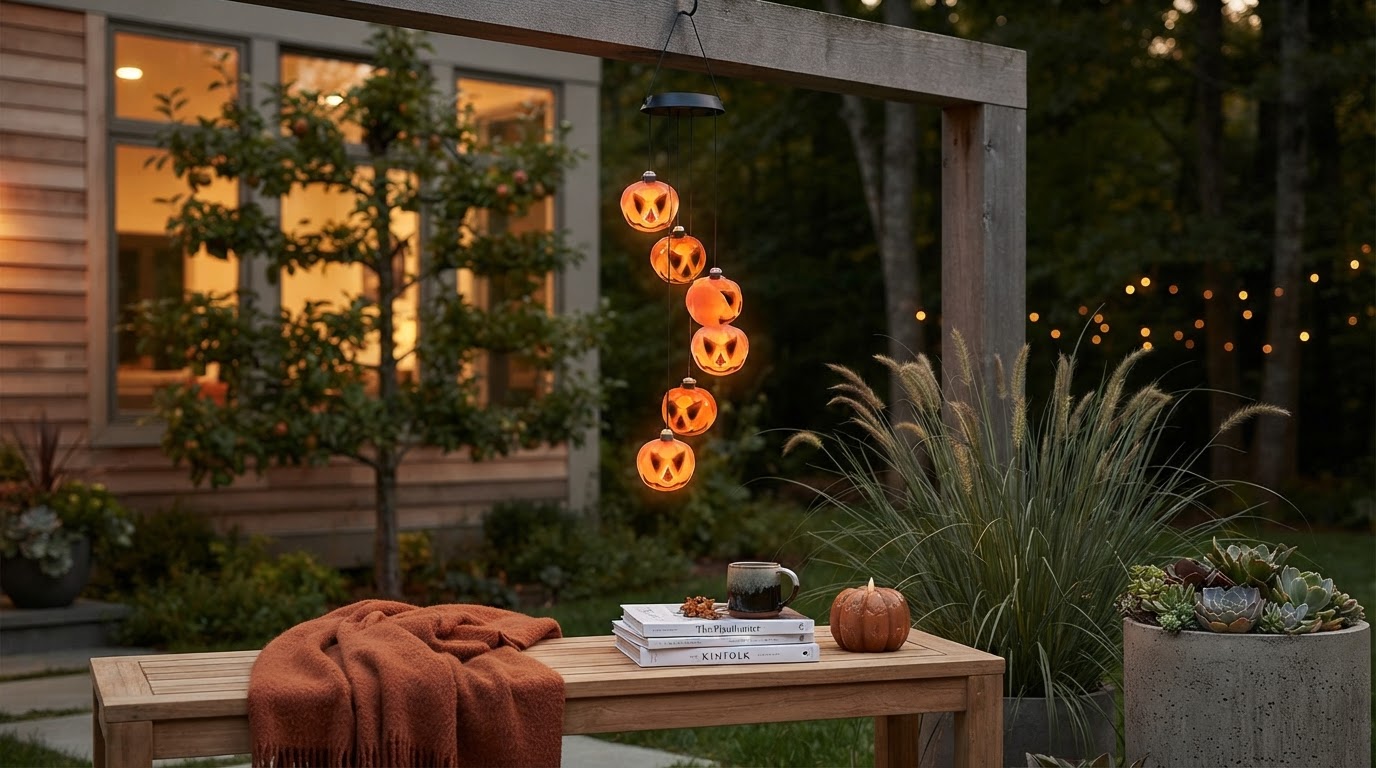
Integrating Solar Pumpkin Chime Decor into Modern Landscapes
 Maya ChenContributing Editor
September 11, 2026. This evaluation explores the technical integration of solar-powered kinetic sculptures into residential exterior design. It is intended for homeowners seeking to balance seasonal aesthetics with sustainable energy management.
The Efficiency Gap in Seasonal Lighting
The conventional wisdom says that seasonal outdoor lighting is inherently wasteful, relying on disposable batteries or high-draw electrical grids to achieve a temporary aesthetic effect. However, the move toward photovoltaic integration has shifted the conversation from energy consumption to energy efficiency. Most consumers prioritize visual impact over hardware longevity, leading to a market saturated with low-grade plastics that degrade under UV exposure within a single season. According to the International Energy Agency, the transition to decentralized solar applications requires a rigorous focus on durability and conversion efficiency to be truly sustainable. The problem isn't the desire for a festive atmosphere; it's the failure of standard hardware to survive the fluctuations of autumn weather. High-moisture environments and decreasing daylight hours in the northern hemisphere create a hostile environment for standard solar cells. When selecting [fall themed solar wind chimes](/blog/fall-themed-solar-wind-chimes), the failure point is almost always the seal around the battery compartment or the quality of the polycrystalline silicon used in the panel. Without a minimum IP65 waterproof rating, these units become e-waste by the first frost. The industry consensus suggests that a simple "seasonal" label excuses poor engineering, but the math suggests otherwise: a device that fails in 60 days has a significantly higher environmental cost than a permanent fixture, regardless of its power source. Homeowners often overlook the impact of "ghost draw" in cheaper units where the light sensor fails to properly disengage during the day, preventing a full charge even in direct sunlight.
Engineering the Solar Pumpkin Chime
Addressing these mechanical failures requires a departure from toy-grade construction toward architectural-grade solar components. The Solar Pumpkin Chime utilizes a centralized solar collector that feeds an internal Ni-MH battery, designed specifically to handle the shorter recharge windows typical of late September and October. Here's the part nobody talks about: the weight distribution of the pumpkins themselves directly affects the acoustic quality and the strain on the suspension cords. By utilizing lightweight, weather-resistant resins, the [solar pumpkin chime](/blog/solar-pumpkin-chime) achieves a resonance that mimics traditional metal tubes without the excessive mass that leads to cord snapping in high winds. The integration of color-changing LEDs within the pumpkin housing serves a dual purpose: it provides ambient illumination while acting as a heat sink for the small internal circuit. This is particularly relevant when comparing these units to a standard jack o lantern wind chime solar model, which may lack the reinforced mounting points necessary for long-term outdoor exposure. The structural integrity of the [pumpkin solar wind chimes](/blog/pumpkin-solar-wind-chimes) depends on the gauge of the nylon threading and the placement of the solar panel relative to the suspension hook. If the panel is shaded by the hanging apparatus, the charging efficiency drops by up to 40%. The Solar Pumpkin Chime solves this by utilizing an oversized top-mount plate that ensures the sensor remains the highest point of the assembly, unobstructed by the decorative elements below. This design ensures that even in partial shade, the unit can reach a functional charge state within 6 to 8 hours of ambient light exposure.
Technical Decision Framework for Seasonal Solar
Run the math: a solar chime that provides 8 hours of light after a 6-hour charge is operating at a high efficiency for consumer-grade electronics. When evaluating these units for a landscape project, the focus must remain on the hardware's ability to withstand thermal expansion and contraction. I'll change my mind when a manufacturer produces a biodegradable solar cell, but until then, longevity is the only true metric of sustainability in this category. Before finalizing a purchase for a jack o lantern wind chime solar setup, homeowners should verify the following specifications to ensure the hardware survives the season:
- Photovoltaic Material: Ensure the panel uses monocrystalline or high-grade polycrystalline silicon for maximum absorption during overcast autumn days.
- Battery Access: Verify if the Ni-MH battery is replaceable; units with sealed compartments are essentially disposable once the battery cycles out.
- Weight Balance: Check that the chime elements are spaced to prevent tangling in winds exceeding 15 mph.
- Lumen Output: Look for a balance between aesthetic glow and battery drain; 10-15 lumens is generally sufficient for decorative purposes.
- Suspension Strength: Inspect the hook and main cord for UV-stabilized materials to prevent fraying and snapping.