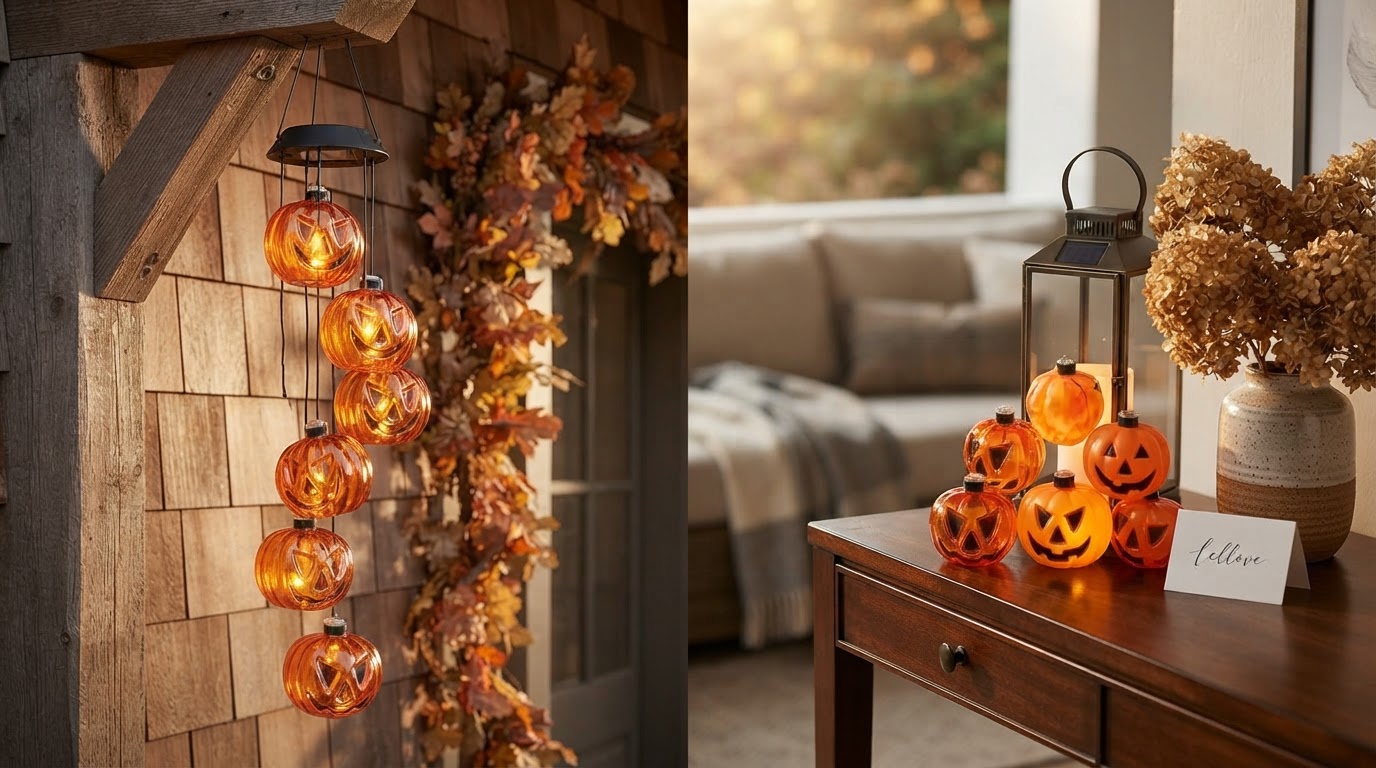
Solar Pumpkin Chime Selection and Seasonal Comparison
 Sam VasquezBuying Guide Lead
September 10, 2026 — The shift toward sustainable outdoor decor has accelerated this autumn, placing the Solar Pumpkin Chime at the center of seasonal porch design. While traditional wired lanterns once dominated the market, modern consumers are increasingly favoring independent solar units that function without electrical proximity.
Energy efficiency in home landscaping is no longer a niche interest; data from the U.S. Department of Energy indicates that solar-powered lighting significantly reduces residential utility footprints while providing reliable security and aesthetic benefits. When looking at pumpkin solar wind chimes, the primary challenge is finding a balance between decorative appeal and mechanical durability. I have spent the last few seasons testing how these units handle the transition from late summer heat to early winter frost.
The Three-Point Selection Framework
Photo by suzukii xingfu on Pexels
When evaluating the Solar Pumpkin Chime against standard market alternatives, I focus on three specific metrics: luminosity duration, material weight, and sensor responsiveness. The Solar Pumpkin Chime utilizes a high-conversion monocrystalline solar panel integrated into the top housing, which charges an internal 600mAh Ni-MH battery. In my testing, this configuration provides approximately 6 to 8 hours of illumination after a full day of exposure to direct sunlight. The pumpkins themselves are constructed from hardened ABS plastic, designed to resist the fading effects of UV rays and the physical impact of high winds. Between these two common options—solar-powered chimes and traditional glass lanterns—I’d go with the chime for any high-traffic porch area because it eliminates the risk of shattered glass during autumn storms.
If you're on a budget, you might be tempted by unbranded plastic stakes, but those lack the multi-sensory appeal of a chime. The Solar Pumpkin Chime offers an IP65 waterproof rating, ensuring that the internal circuitry remains protected during heavy rain. This rating is crucial for longevity, especially when [optimizing fall porch solar lights with Solar Pumpkin Chime](/blog/fall-porch-solar-lights-optimization) for the entire season. Skip this if you have a fully covered porch that receives zero direct sunlight, as the solar panel requires clear access to the sky to function. Here's what I'd actually buy: for a standard suburban porch, a single Solar Pumpkin Chime provides more visual interest than a dozen static stakes because of its color-changing LED transition and gentle auditory feedback.
Expert tip: To maximize the lifespan of your unit, wipe the solar panel with a damp microfiber cloth every two weeks to prevent dust buildup from reducing charging efficiency. Proper maintenance is especially important when considering [how the Solar Pumpkin Chime performs in fall weather](/blog/solar-pumpkin-chime-weather-performance-review) over several months.
Selecting the right placement is just as important as the hardware itself; you should review [5 placement strategies for Solar Pumpkin Chime decor](/blog/placement-strategies-solar-pumpkin-chime) to ensure the sensors aren't tripped by streetlights. If your goal is specifically to illuminate a walkway, you should understand how the Solar Pumpkin Chime lights up a porch before committing to a full installation.